AS 2025 has come to a close and the new year has rolled round – here are some of the past year’s most popular fitness trends.
1. Wearable technology
Data-driven fitness is booming in 2025.
In a world where people are ever in competition with themselves, it’s no surprise that wearable technology is trending.
Smart watches and rings:
Devices like the Apple Watch Series 9 and Oura Ring 4 now track heart rate, ECG, blood oxygen, sleep, and even menstrual health.
Heart Rate Variability (HRV) tracking:
HRV is becoming a key metric for recovery and stress management, helping trainers adjust intensity based on readiness levels.
Glucose monitoring:
Continuous glucose monitors (CGMs) are moving into mainstream fitness, allowing users to fine-tune nutrition and performance.
Integration:
Wearables are no longer standalone, they sync with apps, AI coaching platforms, and gym systems to deliver personalised insights.
Why it matters:
When clients want to optimise their performance, data-driven technology is the ultimate boost.
Gym owners can take advantage of this by transforming wearable technology into motivation.
Seeing real data means that workouts feel more rewarding and rest days feel well-earned.
See Myzone’s approach to motivation technology on *PAGE NUMBER.
2. Exercise programs for older adults
Longevity focus:
Programmes emphasise mobility, balance and strength to combat age related muscle loss.
Low-impact training:
Classes like chair yoga, aqua aerobics and resistance band circuits are popular for older clients.
Social connection:
Dance-based programs and group classes reduce fall risk, whilst boosting mood and brain function.
Why it matters:
In your area, it will always be more difficult to attract and retain certain groups of clients.
The older generation are typically under-served when it comes to the fitness industry.
Creating tailored sessions and making more elderly clients feel seen can make a huge difference.
3. Mindful movement
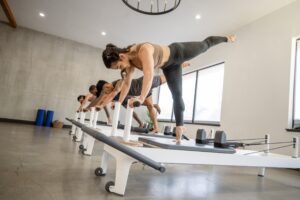
Yoga and Pilates:
These are being reframed as tools for stress reduction and longevity (another trend), not just fitness.
Breathwork and meditation:
Gyms are adding guided breathwork sessions to improve recovery and mental clarity.
Mental health:
Fitness is shifting from aesthetics to holistic wellbeing, with exercise for mental health ranked among top trends.
Why it matters:
In an ever-expanding industry, fitness professionals are eager to get a slice of the hottest trends.
Mindful movement isn’t just a trend, the discipline’s results are long-lasting.
As former Emmerdale star and reformer Pilates studio owner, Daisy Campbell, says: “Pilates is here to stay.”
4. Community fitness
Group training:
Bootcamps, run clubs, and functional fitness races (HYROX, DEKA) are surging in popularity.
Social accountability apps:
Platforms encourage peer support, tracking progress with friends or teams.
Inclusive experiences:
Gen Z and Millennials drive demand for community-focused gyms, seeing fitness as social as well as physical.
Competition and camaraderie:
Fitness racing events are oversubscribed, showing the appeal of shared challenge.
Why it matters:
People who gym together stay together.
Not only is it good for building friendships, but the camaraderie of classes mean higher client retention.
These popular classes can easily be integrated into your gym’s daily operations.
5. Biohacking and recovery services
Cryotherapy
Widely marketed for reducing inflammation, boosting recovery, and mental resilience.
Infrared saunas
Promoted for detoxification, circulation, and relaxation benefits.
Traditional recovery
Physiotherapy still remains popular to treat injuries and offer preventative services.
Mainstream biohacking
Once niche, biohacking is now a premium wellness offering, with personalised nutrition and biomarker testing becoming standard.
Giving a premium feel to any gym experience, recovery services can be both a unique selling point and part of a tiered membership system.
By encouraging members to get involved with wellness, fitness becomes a lifestyle instead of a hobby.
Partner up with local companies if you don’t have the facilities yourself.